
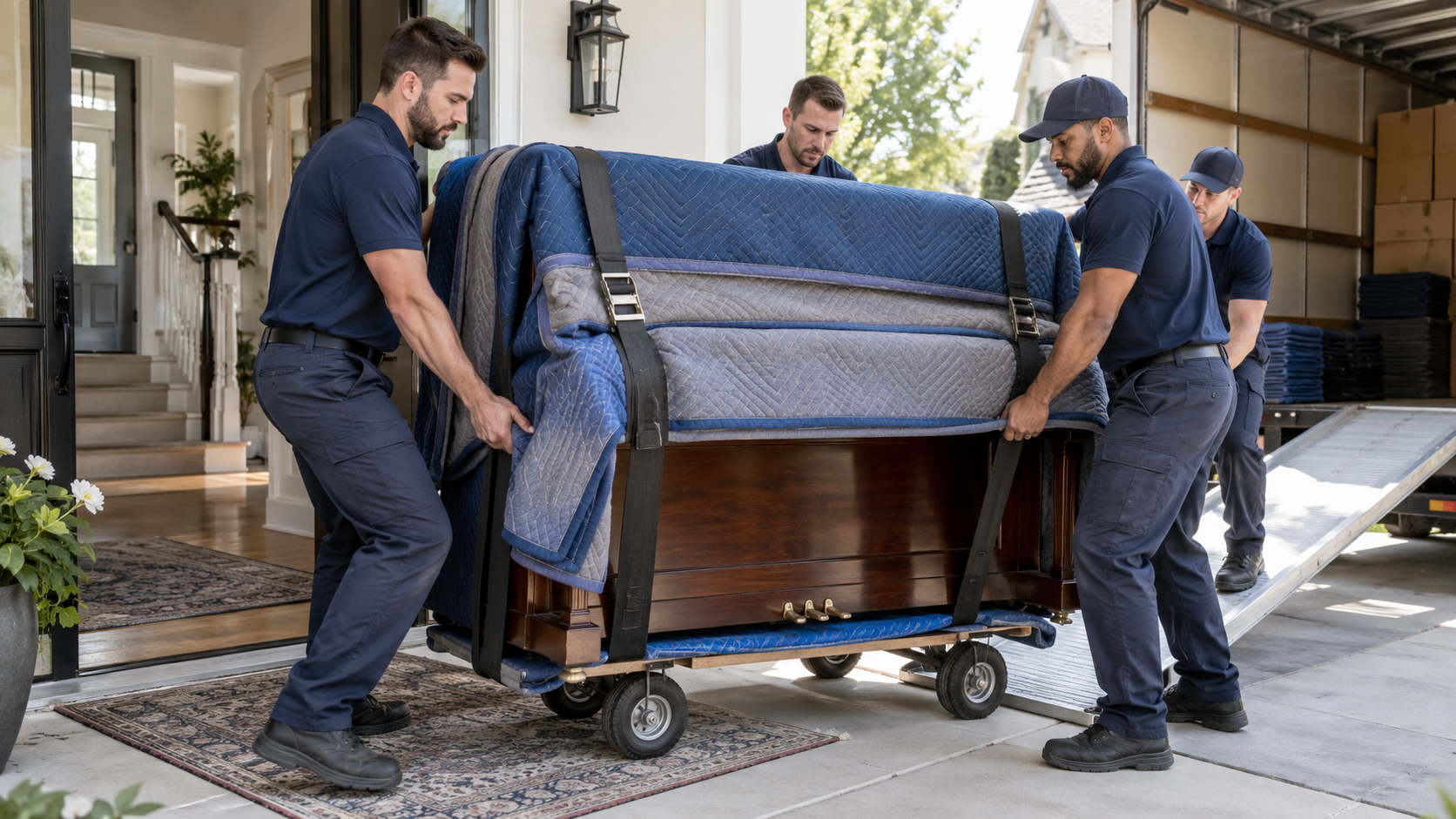
Few household items are harder to move than a piano. It’s heavy, awkwardly shaped, delicate on the inside, and often deeply sentimental—which makes piano shifting one of the highest-stakes parts of any relocation. Get it wrong, and you risk a damaged instrument, a dented wall, or a serious injury.
Whether you’re wondering how to move a piano without professional help, researching how to move a piano long distance, or just want to understand the process before booking movers, this guide breaks down everything involved in moving a piano safely.
If you’d rather leave it to the experts, Ashville Removals offers experienced heavy item movers across Melbourne who handle pianos, safes, and other awkward, high-value items as part of our everyday work.
How Much Does a Piano Actually Weigh?
Before you attempt to move a piano yourself, it helps to know what you’re dealing with:
- Upright pianos typically weigh between 130 kg and 375 kg
- Grand pianos can weigh anywhere from 220 kg to 650 kg, depending on size
At this weight, even a short how-to move an upright piano job within the same room isn’t something to take lightly, and a long-distance or multi-story move raises the risk significantly.
Should You Move a Piano Yourself or Hire Professionals?
This is the first decision to make, and it comes down to three things: the piano’s weight, the distance involved, and whether stairs are in play.
A short, flat, single-room shift with 3–4 capable helpers and the right equipment can sometimes be done DIY. But if you’re navigating stairs, tight doorways, or a long-distance move, professional piano movers are strongly worth the cost; they carry specialized equipment like piano boards, skids, and heavy-duty dollies, and they’re insured if something goes wrong. Given how expensive pianos are to repair (or replace), many people find the peace of mind is worth it.
Equipment You’ll Need for Moving a Piano
If you’re tackling it yourself, gather the following before moving day:
- A piano dolly or piano skid board (hire from an equipment supplier if you don’t own one)
- Heavy-duty moving straps and shoulder harnesses
- Furniture blankets or padded wraps
- Shrink wrap or tape to secure the blankets
- A ramp or hydraulic lift if loading onto a truck
- Work gloves and closed-toe boots for anyone helping lift
How to Move a Piano: Step-by-Step
1. Measure Everything First
Measure the piano itself, then every doorway, hallway, and staircase, and turn it so it needs to pass through both at the old location and the new one. This is the step people skip most often, and it’s the one that causes pianos to get stuck mid-move.
2. Clear the Path
Remove furniture, rugs, and anything else in the piano’s route. Make sure kids and pets are out of the way, and confirm your team knows the plan before you start lifting.
3. Prepare the Piano
- Lock the keyboard lid and secure or remove the music stand
- Check inside the lid for anything loose (sheet music, small parts) and pack it separately
- For a grand piano, carefully remove the legs and pedals with help, and never let the piano’s side rest on the ground once the legs are off
- For an upright piano, keep it upright throughout; never tip it onto its back or front
4. Wrap and Secure It
Wrap the entire piano in furniture blankets, securing them with tape or shrink wrap so they don’t shift in transit. Pay extra attention to corners and legs, which are the most vulnerable points.
5. Load It onto a Dolly or Skid Board
Carefully tilt the piano (with help never alone) onto the piano board or heavy-duty dolly, and strap it securely so it’s centered and balanced before moving it anywhere.
6. Move It Slowly and Communicate
Whether you’re going through a hallway or up a ramp into a truck, move slowly, communicate clearly with your team at every step, and never rush corners or inclines.
7. Load and Transport Carefully
Use a truck with a ramp or hydraulic lift, and make sure the vehicle is tall enough to fit the piano upright. Strap it firmly inside the truck so it can’t shift during transit—this matters even more for how to move a piano long distance, where hours on the road multiply the risk of vibration damage.
8. Settle It In at the New Location
Once it’s in place, don’t rush to play it. Give the piano time to adjust to the new room’s temperature and humidity, and avoid positioning it near outside walls, direct sunlight, or draughty breezeways, all of which can warp the wood or affect tuning over time.
How to Transport a Piano Long Distance
Long-distance moves add extra risk simply because of time on the road and more chances for vibration, temperature swings, and shifting. For interstate or long-haul moves, it’s worth confirming your mover:
- Uses a climate-considerate, secured section of the truck
- Straps the piano so it genuinely can’t move during transit
- Has specific experience with pianos, not just general furniture
Ashville Removals’ team handles pianos as part of our local removalist services and interstate removalist offerings, with the padding, strapping, and dolly equipment to move them safely whether it’s a few suburbs away or across the country.
After the Move: Retuning Your Piano
Once your piano’s settled into its new home, book a professional retune around 3–4 weeks later. Changes in humidity, temperature, and even the acoustics of a new room can affect tuning, so give it time to adjust before calling a tuner out.
Common Mistakes to Avoid When Moving a Piano
- Attempting it alone—pianos require multiple people, full stop.
- Skipping the measurements—a piano stuck halfway through a doorway is a nightmare to fix.
- Tipping an upright piano onto its back—this can damage the internal action and soundboard.
- Letting a grand piano’s body touch the ground after the legs are removed—always support it fully.
- Rushing on stairs—take breaks, use a spotter, and never let momentum carry the weight.
Frequently Asked Questions
1. How much does it cost to move a piano? Cost depends on the piano type, distance, and whether stairs are involved, but professional piano removals typically range from a few hundred dollars for a local upright move to significantly more for grand pianos or long-distance jobs. Get a quote based on your specific piano and move details for an accurate figure.
2. Can I move a piano by myself? It’s not recommended. Even a small upright piano weighs well over 100 kg, and moving one solo risks serious injury as well as damage to the instrument. If you don’t have several strong helpers and proper equipment like a piano dolly and straps, hiring professional piano movers is the safer choice.
3. How do you move an upright piano down stairs? Use a piano dolly or stair-climbing equipment, keep the piano upright throughout, and have a spotter below to help guide and control the descent. Move slowly, communicate constantly with your team, and never let the piano’s weight rest on one person.
4. Do grand pianos need to be disassembled to move? Yes, the legs, pedal lyre, and sometimes the music desk are typically removed before moving a grand piano. This reduces weight, protects the delicate components, and makes it easier to maneuver through doorways and hallways.
5. How long does a piano need to settle after being moved? Give it at least a few days in its new spot before playing extensively, and book a professional retune around 3–4 weeks after the move once it’s had time to adjust to the new room’s temperature and humidity.
Planning to move a piano? Get a free quote from Ashville Removals and let Melbourne’s experienced heavy item movers handle it safely, start to finish.